
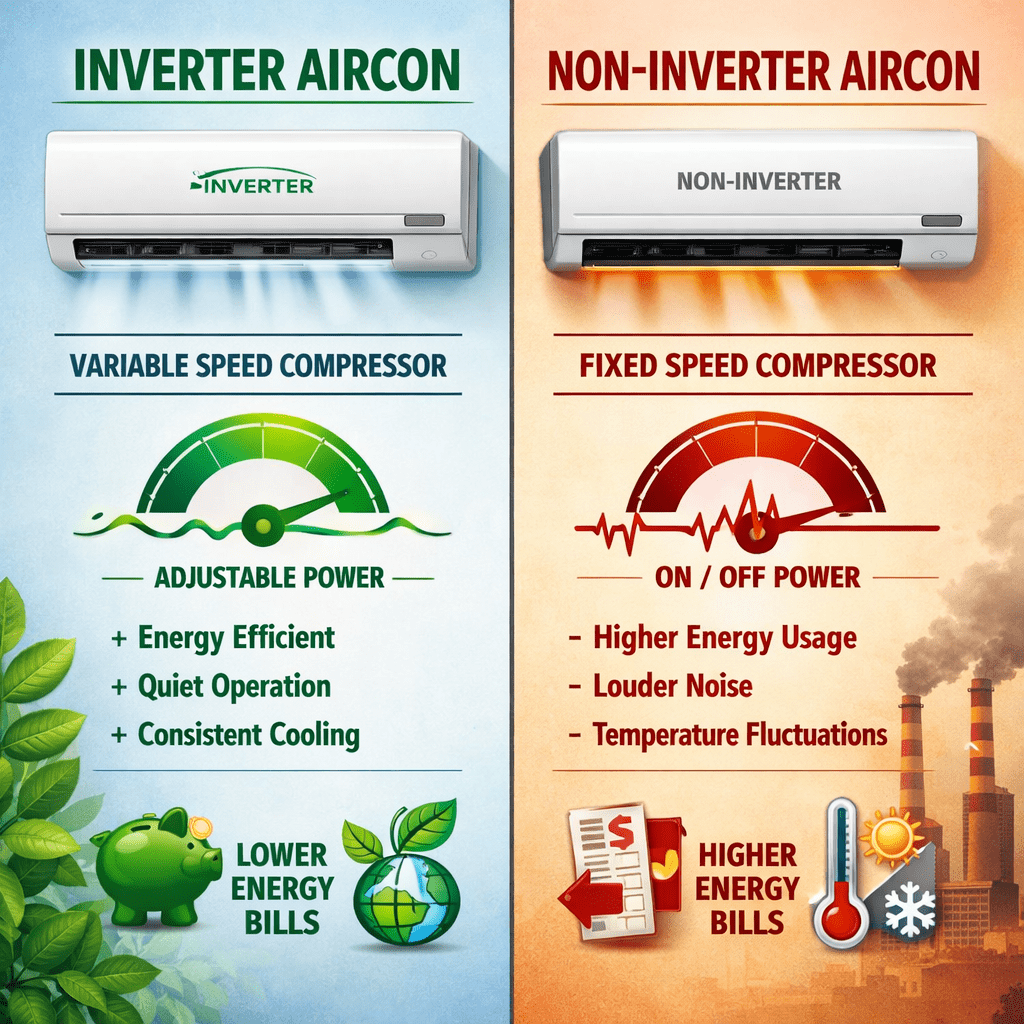
Inverter vs. Non-Inverter Air Conditioners: Making the Right Choice for Your Home Are you considering upgrading your air conditioning system but feeling overwhelmed by various options available on the market? One of the most significant decisions you’ll face is choosing between inverter and non-inverter air conditioners. In this comprehensive guide, we’ll break down everything you need to know about these two types of systems to help you make an informed decision. What are Inverter Air Conditioners? Let’s start by discussing inverter air conditioners. Unlike traditional non-inverter models, which operate at a fixed speed, inverter air conditioners use innovative technology to adjust the compressor speed according to the cooling or heating requirements of the space. This results in precise temperature control, faster cooling/heating, and significantly lower energy consumption. In simpler terms, inverter air conditioners work smarter, not harder, to keep you comfortable. One of the primary benefits of inverter technology is its energy efficiency. By continuously adjusting the compressor speed to match the desired temperature, inverter air conditioners consume only the necessary amount of electricity, leading to a huge cost savings over time. Additionally, inverter models tend to operate more quietly and produce fewer temperature fluctuations, providing a consistently comfortable indoor environment. What are Non-Inverter Air Conditioners? Now, let’s turn our attention to non-inverter air conditioners. These are the traditional models that operate at a fixed speed, cycling on and off to maintain the desired temperature. While non-inverter air conditioners are generally more affordable upfront, they tend to be less energy-efficient than their inverter counterparts. Because they cannot adjust their compressor speed, non-inverter models consume more electricity and may lead to higher energy bills in the long run. Despite their lower initial cost, non-inverter air conditioners come with some drawbacks. They are often louder during operation, as the compressor switches on and off frequently. Additionally, non-inverter models may struggle to maintain a consistent indoor temperature, leading to potential discomfort for occupants. However, for those on a tight budget or with limited cooling/heating needs, non-inverter air conditioners may still be a viable option Energy Efficiency and Cost Savings One of the most significant advantages of inverter air conditioners is their superior energy efficiency, which translates to substantial cost savings for homeowners. Unlike non-inverter models, which operate at full capacity until the desired temperature is reached and then shut off, inverter air conditioners adjust their compressor speed to maintain a consistent temperature, consuming only the energy required to meet the cooling or heating demands of the space.This results in lower electricity bills and reduced environmental impact over time. To put it into perspective, let’s consider a hypothetical scenario: two identical homes, one equipped with an inverter air conditioner and the other with a non-inverter model. Over the course of a year, the homeowner with the inverter air conditioner could see significant savings on their energy bills compared to their counterpart with the non-inverter system. Additionally, inverter air conditioners typically have a longer lifespan and require less frequent maintenance, further contributing to cost savings over time. Performance and Comfort When it comes to performance and comfort, inverter air conditioners have a clear advantage over non-inverter models. Thanks to their ability to adjust compressor speed and maintain a consistent indoor temperature, inverter air conditioners provide superior cooling/heating performance and a more comfortable living environment. Previous Next Whether it’s a scorching summer day or a chilly winter night, you can rely on an inverter air conditioner to keep you comfortable year-round. In contrast, non-inverter air conditioners may struggle to maintain a consistent temperature, leading to potential discomfort for occupants. Additionally, non-inverter models tend to produce more noise during operation, as the compressor switches on and off frequently. This can be particularly disruptive during the night or in quiet environments, such as bedrooms or home offices Noise Levels and Durability Another factor to consider when comparing inverter and non-inverter air conditioners is noise levels and durability. Inverter air conditioners are known for their quieter operation, as the compressor adjusts its speed smoothly and continuously to meet the cooling or heating demands of the space. This results in a more peaceful indoor environment, free from the constant hum of a traditional non-inverter model. Additionally, inverter air conditioners are often more durable and require less frequent maintenance than non-inverter models. Because they operate more efficiently and experience fewer temperature fluctuations, inverter air conditioners experience less wear and tear on their components, leading to a longer lifespan and fewer repair costs over time. Environmental Impact In today’s environmentally conscious world, reducing carbon emissions and minimizing energy consumption are top priorities for many homeowners. In this regard, inverter air conditioners have a clear advantage over non-inverter models. By consuming only the necessary amount of energy to meet the cooling or heating demands of the space, inverter air conditioners help reduce carbon emissions and conserve energy resources, making them a more eco-friendly choice for environmentally conscious consumers Additionally, inverter air conditioners often use more environmentally friendly refrigerants, further reducing their environmental impact. By choosing an inverter air conditioner, you can reduce your carbon footprint and contribute to a more sustainable future for generations to come. Factors to Consider When Choosing Between inverter and non-inverter aircons Now that we’ve explored the differences between inverter and non-inverter air conditioners, let’s discuss some factors to consider when making your decision. Budget: While inverter air conditioners tend to be more expensive upfront, they offer greater long-term energy savings and lower operating costs. You can also grab our at one of our stores. Cooling/Heating Requirements: Consider the size of the space you need to cool or heat and choose an air conditioner with the appropriate capacity to meet your needs. Energy Efficiency Ratings: Look for energy-efficient models with high SEER (Seasonal Energy Efficiency Ratio) ratings to maximize energy savings and minimize environmental impact. Noise Levels: If noise is a concern, opt for an inverter air conditioner with a reputation for quiet operation. Installation and Maintenance: Consider the installation and maintenance requirements of

Staying Cool in South africa: a beginner’s guide to hVAC systems In the heart of South Africa, where the sun reigns supreme and heatwaves dance across the landscape, staying cool isn’t just a luxury—it’s a survival strategy. Imagine this: what’s now a discomfort could become a deadly threat for nearly half to three-quarters of the population by the century’s end. It’s a warning bell ringing loud and clear—a call to action we can’t afford to ignore. One thing is certain: it’s time to take control of our indoor climate. But fear not, for we’re about to embark on a journey through the realm of HVAC systems—a journey that promises cool relief and comfort. Are you ready to beat the heat? Let’s get started! How Do HVAC Systems Work? HVAC stands for Heating, Ventilation, and Air Conditioning—a collection of technologies working in harmony to regulate indoor temperature, humidity, and air quality. Each component plays a crucial role in maintaining a comfortable and healthy indoor environment, regardless of external weather conditions. At its core, HVAC systems operate on the principle of thermal energy transfer. During cooling mode, heat energy is extracted from indoor air, cooling it down before being expelled outside. Conversely, during heating mode, heat energy is transferred from the heating source to the indoor air, raising its temperature. This thermal energy transfer is facilitated by refrigerants—chemical compounds with high heat absorption and release properties. As refrigerant flows through the system, it undergoes phase changes, alternately absorbing and releasing heat energy to achieve the desired indoor temperature. Top Air Conditioners to Consider: When it comes to investing in an air conditioning system for your home or office, choosing the right brand can make all the difference in terms of performance, durability, and energy efficiency. Among the plethora of options available in the market, two brands stand out for their exceptional quality and reliability: Jet Air and Alaska. Samsung AR3000 Non-Inverter Samsung AR6500 Windfree Inverter Renowned for its cutting-edge technology and superior cooling performance, Samsung offers a range of both inverter and non-inverter air conditioners to suit different needs and preferences. Inverter models provide precise temperature control and energy savings by adjusting compressor speed, while non-inverter models offer reliable cooling performance at a more affordable price point. Alaska EV09 Eco Inverter Series Alaska Non Inverter Ax Series Alaska air conditioners are synonymous with durability and dependability, available in both inverter and non-inverter variants to cater to diverse requirements. Inverter models deliver energy-efficient cooling with variable compressor speed, ensuring optimal comfort while reducing electricity consumption. On the other hand, non-inverter models provide reliable cooling performance without the advanced features of their inverter counterparts, making them a cost-effective choice for budget-conscious consumers. Importance of Regular Maintenance Regular maintenance isn’t just about keeping your HVAC system in good shape; it’s about safeguarding your investment and ensuring optimal performance, especially in a climate as demanding as South Africa’s. Here’s why it matters: Enhanced Efficiency Over time, dust, debris, and wear and tear can take a toll on your HVAC system, causing it to work harder and consume more energy to maintain the desired temperature. Regular maintenance helps keep components clean, lubricated, and operating smoothly, resulting in improved efficiency and lower energy bills.Prevention of BreakdownsNothing disrupts comfort quite like an unexpected HVAC breakdown, especially during the sweltering heat of summer. By scheduling regular maintenance checks, potential issues can be identified and addressed before they escalate into major problems, reducing the risk of untimely breakdowns and costly repairs.Extended LifespanJust like regular oil changes prolong the life of a car engine, routine maintenance extends the lifespan of your HVAC system. By addressing minor issues early on and ensuring all components are functioning optimally, you can enjoy reliable performance for years to come, delaying the need for costly replacements. Previous Next Signs of HVAC Problems Your HVAC system plays a crucial role in maintaining comfort and indoor air quality, especially in the demanding climate of South Africa. However, like any mechanical system, it’s susceptible to wear and tear over time. Recognizing the signs of HVAC problems early on can help prevent minor issues from escalating into major malfunctions. Here are some common signs that indicate your HVAC system may be experiencing problems: 1. Strange Noises: Unusual sounds emanating from your HVAC system, such as banging, rattling, or grinding noises, may indicate mechanical issues or loose components. Ignoring these noises can lead to further damage and costly repairs down the line. 2. Uneven Cooling or Heating: If certain areas of your home consistently feel warmer or cooler than others, it could be a sign of airflow problems, duct leaks, or thermostat issues. Addressing these issues promptly can help restore comfort and prevent energy waste. 3. Increased Energy Bills: A sudden spike in your energy bills without a corresponding increase in usage could signal inefficiencies or malfunctions within your HVAC system. This may be due to dirty filters, refrigerant leaks, or aging equipment that requires servicing or replacement. 4. Frequent Cycling or Short Cycling: If your HVAC system frequently turns on and off, or cycles on and off rapidly, it may be experiencing issues with temperature regulation, thermostat calibration, or compressor malfunctions. This can lead to increased energy consumption and premature wear on components. 5. Poor Indoor Air Quality: Noticeable changes in indoor air quality, such as increased dust, allergens, or humidity levels, may indicate problems with your HVAC system, such as clogged filters, duct leaks, or malfunctioning ventilation components. Addressing these issues can improve comfort and respiratory health. 6. Water Leaks or Moisture Buildup: Water leaks or moisture buildup around your HVAC unit or indoor vents can indicate issues with condensate drainage, refrigerant leaks, or malfunctioning components. Ignoring these signs can lead to water damage and mold growth, compromising indoor air quality and safety. Benefits of Professional HVAC Services While DIY maintenance tasks can help homeowners keep their HVAC systems in good condition, there are certain benefits that only professional servicing can provide. At