
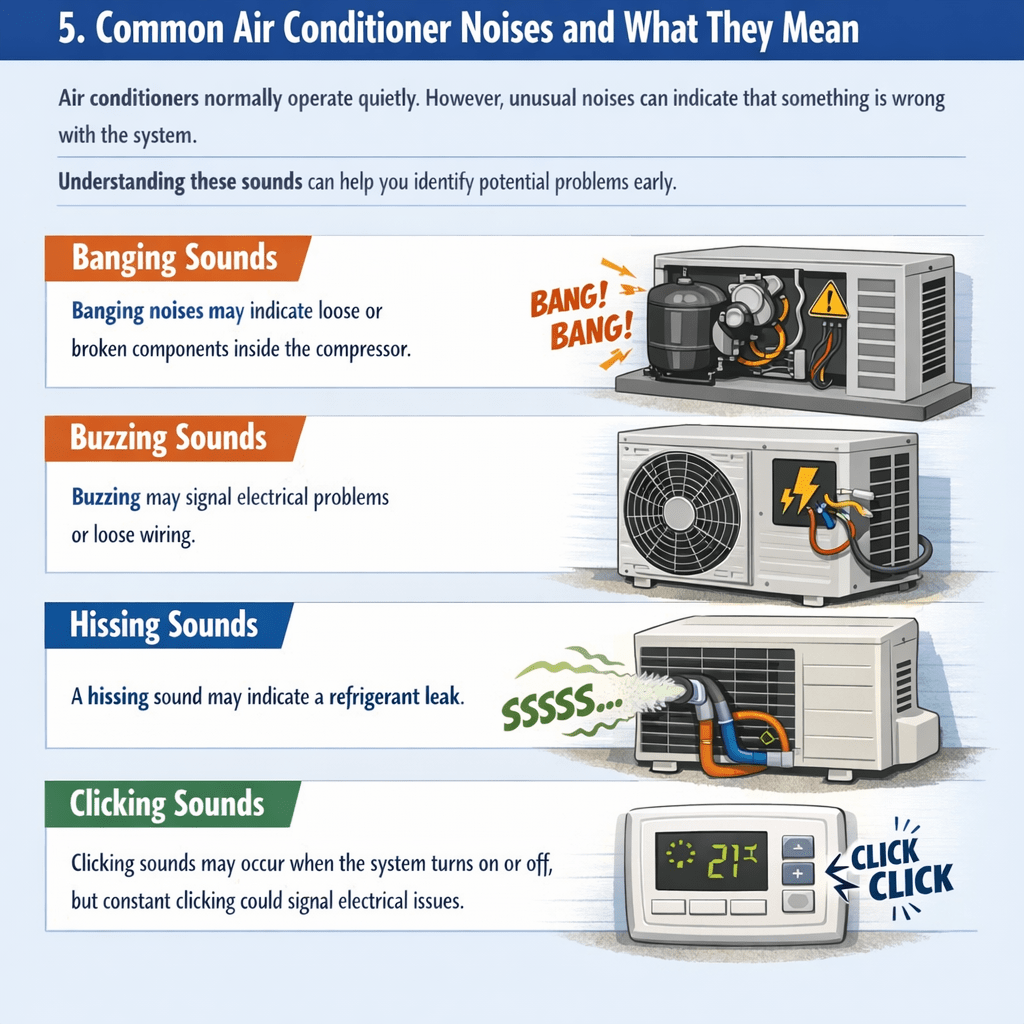
Common Air Conditioner Noises and What They Mean Air conditioners are designed to operate quietly and efficiently while cooling your home or office. When everything is working properly, you should only hear a soft humming sound from the unit as it circulates cool air throughout the room. However, when unusual noises begin to appear, it is often a sign that something inside the system is not functioning correctly. Many homeowners ignore strange sounds coming from their air conditioners, assuming the noise will eventually go away on its own. Unfortunately, this can lead to bigger problems over time. Small mechanical issues can quickly develop into major system failures if they are not addressed early. Understanding the different types of air conditioner noises can help you identify potential problems before they become serious. Certain sounds may indicate minor issues that can be resolved through routine maintenance, while others may signal more serious mechanical or electrical faults that require professional repair. In this guide, we will explore some of the most common air conditioner noises, what they mean, and when it is time to call a professional technician. By learning how to recognize these warning signs, you can protect your air conditioning system, avoid costly repairs, and ensure your home remains cool and comfortable. Why Your Air Conditioner Might Make Strange Noises Before looking at specific sounds, it is important to understand why air conditioners sometimes become noisy. An air conditioning system contains several moving components that work together to cool the air. These components include fans, compressors, motors, refrigerant lines, and electrical parts. Over time, normal wear and tear can affect these components. Dirt buildup, loose parts, worn bearings, and electrical issues can all cause the system to produce unusual sounds. Environmental factors such as dust, debris, and extreme temperatures can also contribute to noise problems. Regular servicing plays an important role in preventing many of these issues. During routine maintenance, technicians clean the system, inspect components, and tighten loose parts to ensure everything operates smoothly. However, when maintenance is neglected or components begin to fail, the system may start producing unusual sounds that should not be ignored. Banging Sounds Banging is one of the most concerning noises that an air conditioner can make. If you hear a loud banging or clanking sound coming from your unit, it may indicate that a component inside the compressor has come loose or broken. The compressor is one of the most important parts of an air conditioning system. It is responsible for circulating refrigerant through the system so that heat can be removed from the air. Because the compressor contains several internal components, any loose or damaged part can cause banging noises as it moves around inside the unit. In some cases, banging sounds may also occur if the fan blades become loose or unbalanced. When the fan spins, loose blades may strike other components, producing loud knocking sounds. Ignoring banging noises can be dangerous because the moving parts may cause further damage to other components. If you hear banging sounds coming from your air conditioner, it is best to turn off the system and contact a professional technician for inspection. Buzzing Sounds Buzzing noises are another common problem that homeowners experience with air conditioning systems. While some air conditioners produce a slight humming sound during normal operation, a loud buzzing noise usually indicates a problem that requires attention. Several issues can cause buzzing sounds in an air conditioner. One of the most common causes is electrical problems. Loose wiring, damaged electrical connections, or failing capacitors can create buzzing noises as electricity flows through the system. Buzzing may also occur if the outdoor unit becomes covered with dirt, leaves, or debris. When airflow is restricted, the system must work harder to operate, which can create unusual vibrations and buzzing sounds. Another possible cause is a malfunctioning fan motor. If the fan motor begins to wear out, it may produce buzzing sounds while struggling to spin properly. Although buzzing noises do not always indicate a serious failure, they should still be investigated by a professional technician. Electrical issues in particular should never be ignored because they may pose safety risks. Hissing Sounds A hissing sound coming from your air conditioner may indicate a refrigerant leak. Refrigerant is the substance responsible for absorbing heat from indoor air and releasing it outside. Without the correct amount of refrigerant, your air conditioner will struggle to cool your home effectively. When a refrigerant line develops a small crack or hole, pressurized refrigerant can escape, producing a hissing noise. This sound may be similar to air escaping from a tire or a small gas leak. Refrigerant leaks are a serious problem that should be repaired immediately. Low refrigerant levels can cause the system to lose cooling capacity and may even damage the compressor if left untreated. Additionally, refrigerant should only be handled by certified technicians because it requires specialized equipment and proper safety procedures. If you hear a persistent hissing sound near your air conditioning unit, it is important to schedule a professional inspection as soon as possible. Clicking Sounds Clicking sounds are not always a cause for concern. In many cases, air conditioners produce a clicking sound when they turn on or off. This is usually caused by electrical components such as relays or thermostats activating the system. However, constant or repeated clicking noises may indicate an electrical issue. Faulty relays, failing thermostats, or damaged control boards can cause the system to repeatedly attempt to start without successfully running. When this happens, the air conditioner may switch on and off frequently, a problem known as short cycling. Short cycling not only produces clicking sounds but can also reduce the efficiency of the system and increase energy consumption. If clicking sounds continue for extended periods or occur repeatedly, it is advisable to have the system inspected by a qualified technician. Rattling Sounds Rattling sounds often occur when loose parts are vibrating inside the air conditioning unit. Screws, panels, or
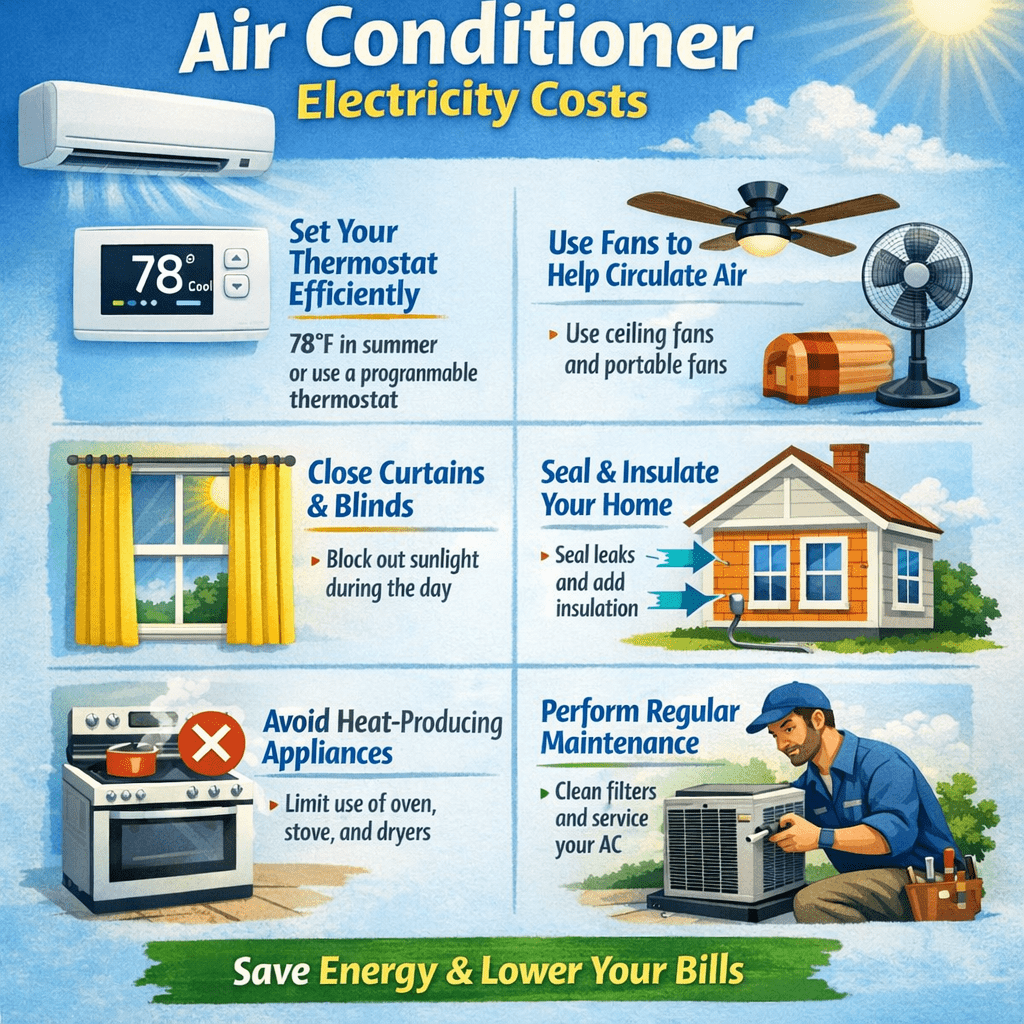
How to Reduce Your Air Conditioner Electricity Costs Air conditioners provide comfort during hot weather, but they can also increase electricity bills. Fortunately, there are several ways to reduce energy consumption while maintaining a comfortable indoor environment. Keep Air Filters Clean Dirty filters force the system to work harder, increasing electricity usage. Use a Programmable Thermostat A programmable thermostat allows you to adjust temperatures automatically throughout the day. Improve Home Insulation Good insulation helps keep cool air inside and prevents heat from entering the home. Schedule Regular Maintenance Routine servicing ensures the system runs efficiently and uses less energy. Use Ceiling Fans Fans help circulate cool air, allowing you to set the thermostat slightly higher without sacrificing comfort. Conclusion By following these simple steps, homeowners can significantly reduce their air conditioning energy costs while maintaining a comfortable living space.
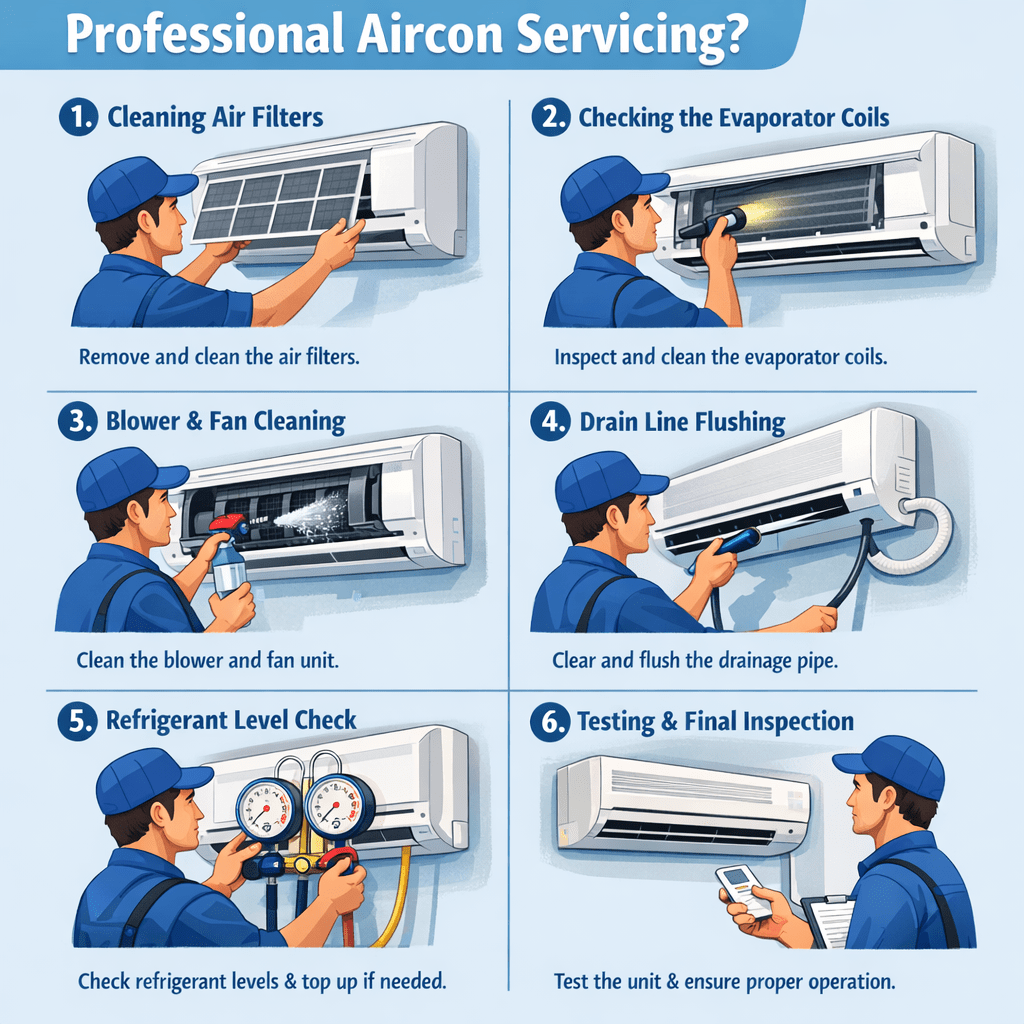
What Happens During Professional Aircon Servicing? Many homeowners know that air conditioners should be serviced regularly, but they are unsure what actually happens during the process. Professional aircon servicing involves a detailed inspection and cleaning of the system. Cleaning the Air Filters Technicians clean or replace air filters to ensure proper airflow and improve indoor air quality. Inspecting the Refrigerant Levels Refrigerant levels are checked to ensure the system can cool effectively. Cleaning the Coils The evaporator and condenser coils are cleaned to remove dirt that can reduce efficiency. Checking Electrical Components Technicians inspect electrical connections to ensure the system operates safely. Inspecting the Drainage System The drainage system is checked and cleaned to prevent water leaks. Testing System Performance Finally, the technician runs the system to ensure it cools properly and operates efficiently. Conclusion Professional air conditioner servicing helps maintain system performance, improve efficiency, and prevent unexpected breakdowns.
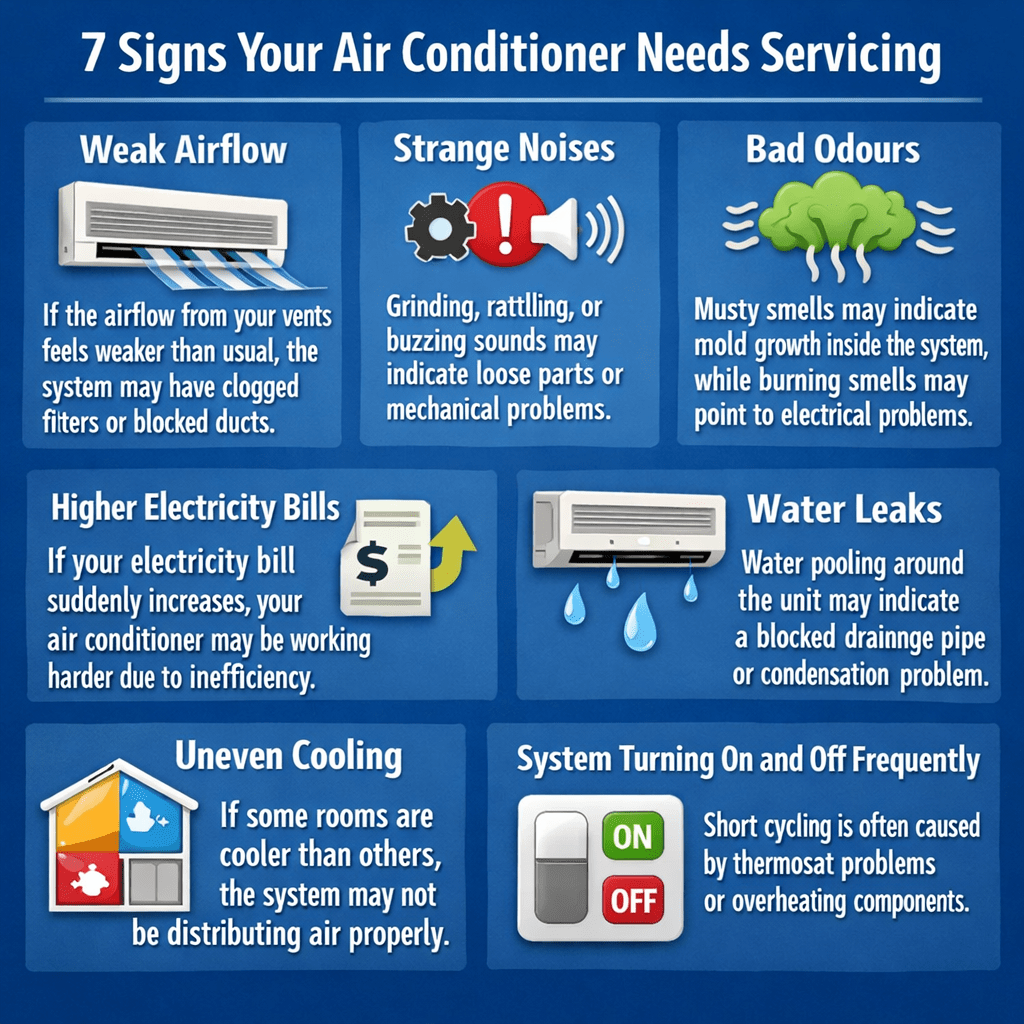
7 Signs Your Air Conditioner Needs Servicing Air conditioners usually show warning signs before they stop working completely. Recognizing these signs early can help prevent expensive repairs and ensure your system continues running efficiently. Here are some of the most common indicators that your air conditioner needs servicing. Weak Airflow If the airflow from your vents feels weaker than usual, the system may have clogged filters or blocked ducts. Strange Noises Grinding, rattling, or buzzing sounds may indicate loose parts or mechanical problems that require immediate attention. Bad Odours Musty smells may indicate mold growth inside the system, while burning smells may point to electrical problems. Higher Electricity Bills If your electricity bill suddenly increases, your air conditioner may be working harder due to inefficiency. Water Leaks Water pooling around the unit may indicate a blocked drainage pipe or condensation problem. Uneven Cooling If some rooms are cooler than others, the system may not be distributing air properly. System Turning On and Off Frequently Short cycling is often caused by thermostat problems or overheating components. Conclusion If you notice any of these signs, scheduling professional air conditioner servicing can help prevent serious damage and keep your system operating efficiently.
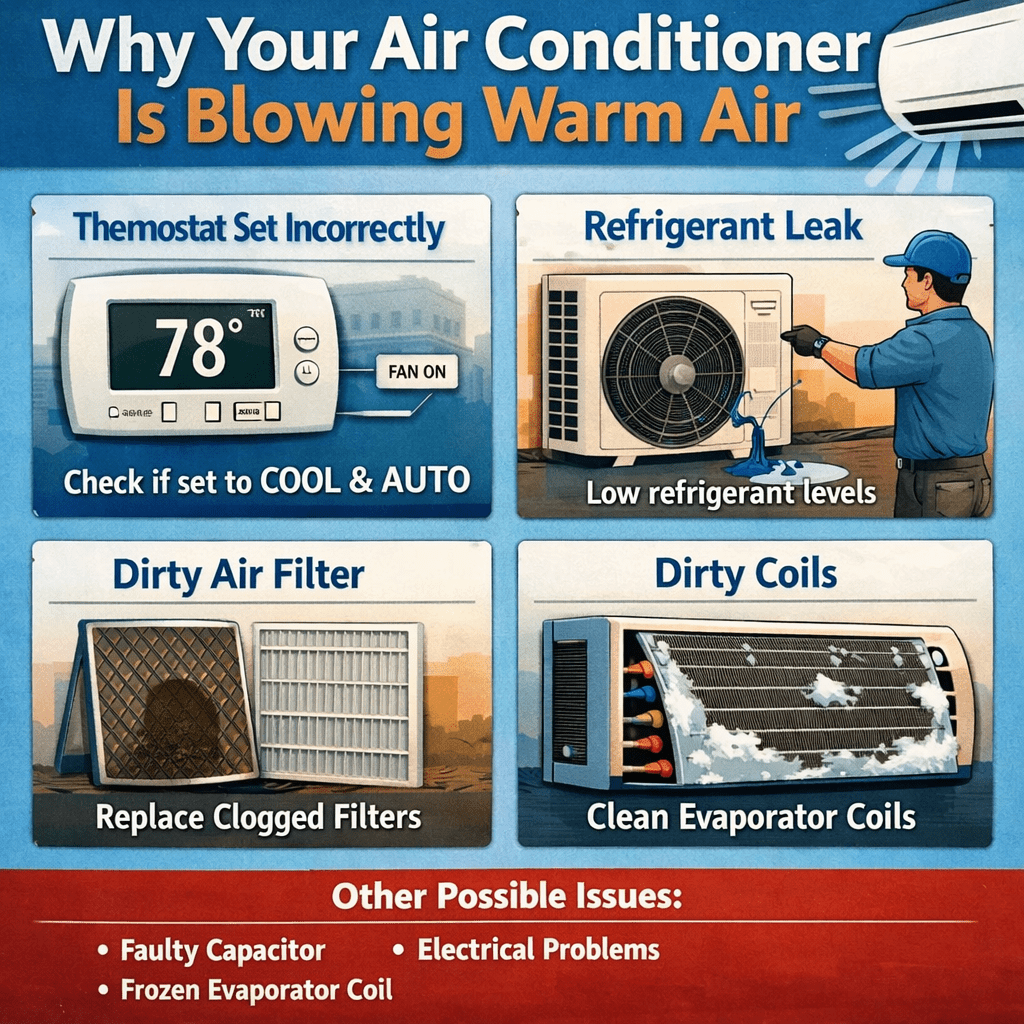
Why Your Air Conditioner Is Blowing Warm Air An air conditioner that blows warm air can quickly make your home uncomfortable, especially during hot days. Many homeowners experience this problem and are unsure what causes it. The good news is that this issue is often caused by common problems that can be repaired by a professional technician. Understanding why your air conditioner is not cooling properly can help you take action before the problem becomes worse. Dirty Air Filters One of the most common reasons for poor cooling is a clogged air filter. Air filters collect dust, dirt, and other particles from the air. Over time, these filters can become blocked, restricting airflow. When airflow is restricted, the air conditioner struggles to cool the room efficiently. Cleaning or replacing filters regularly can restore proper airflow and improve performance. Refrigerant Problems Refrigerant is responsible for absorbing heat from the air and producing cool air. If the refrigerant level drops due to a leak, the system will not cool properly. Low refrigerant levels require professional repair because technicians must locate the leak and refill the system safely. Thermostat Issues Sometimes the problem may be as simple as an incorrect thermostat setting. If the thermostat is set to the wrong mode or is malfunctioning, the system may not cool the room as expected. Checking thermostat settings or replacing faulty thermostats can resolve the issue. Outdoor Unit Problems The outdoor unit is responsible for releasing heat from the system. If the unit becomes blocked by dirt, leaves, or debris, it may not function correctly. Keeping the outdoor unit clean and free from obstructions can improve cooling performance. Conclusion If your air conditioner is blowing warm air, the problem may be caused by dirty filters, refrigerant leaks, thermostat issues, or blocked components. A professional aircon technician can diagnose and repair the issue quickly to restore comfort in your home.
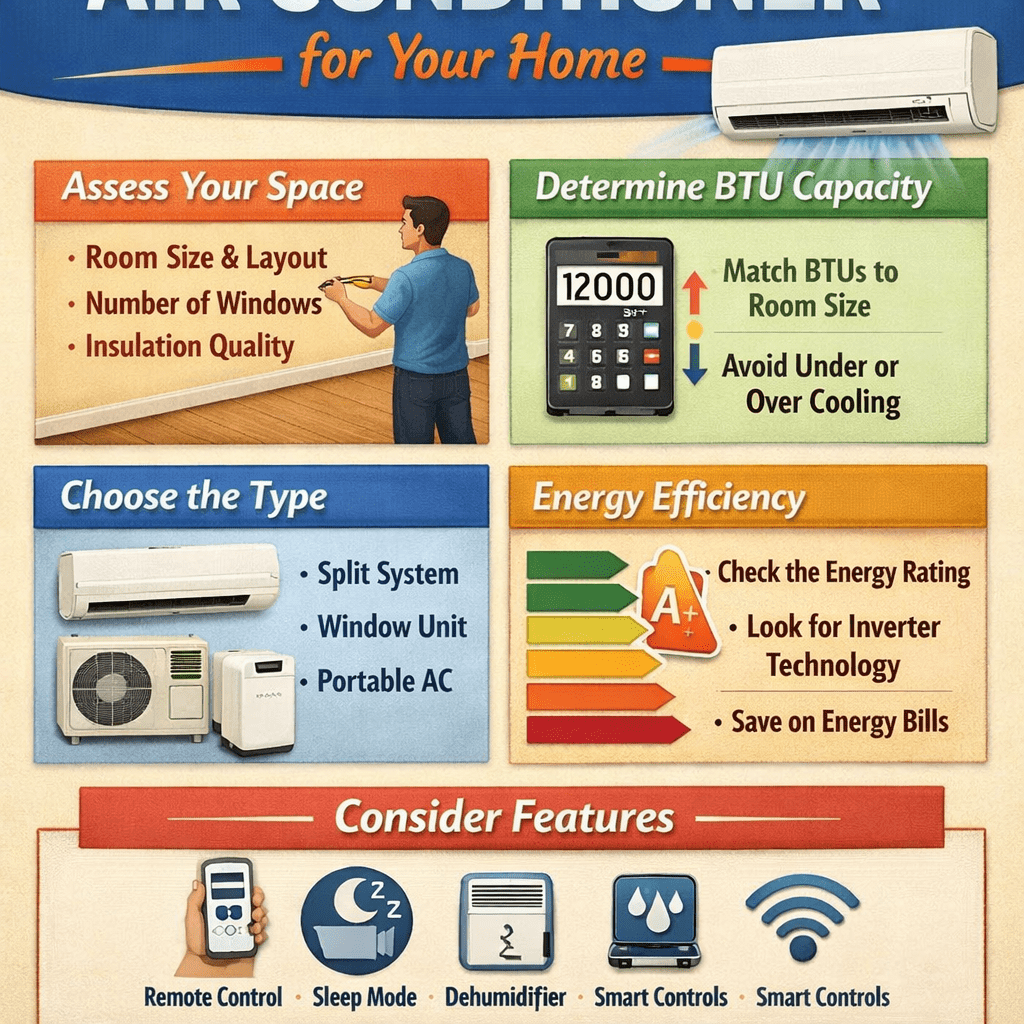
How to Choose the Right Air Conditioner for Your Home Choosing the right air conditioner is an important decision for homeowners. With so many options available, it can be difficult to know which system will provide the best cooling performance and energy efficiency. Understanding the different types of air conditioners and their benefits can help you make the right choice. Consider the Size of Your Space The size of the room or building plays a major role in selecting the correct air conditioner. A unit that is too small will struggle to cool the space, while a unit that is too large may waste energy. Professional technicians often calculate cooling requirements based on room size, insulation, and other environmental factors. Energy Efficiency Ratings Energy efficiency is an important factor when choosing an air conditioner. Systems with higher efficiency ratings consume less electricity and can significantly reduce energy bills. Many modern air conditioners are designed with energy-saving technologies that provide effective cooling while using less power. Types of Air Conditioners There are several types of air conditioning systems available, including: Split systemsWindow unitsPortable air conditionersCentral air conditioning systems Each system has its advantages depending on the size of the property and cooling requirements. Noise Levels Some air conditioners operate more quietly than others. If you are installing a unit in a bedroom or office, choosing a quieter system may improve comfort. Modern systems often include noise reduction features that make them more suitable for indoor environments. Professional Installation Proper installation is just as important as choosing the right air conditioner. Poor installation can reduce efficiency, cause leaks, and lead to frequent breakdowns. Hiring experienced professionals ensures that the system is installed correctly and operates at maximum performance. Conclusion Selecting the right air conditioner requires careful consideration of space, efficiency, noise levels, and installation quality. By choosing the right system and ensuring professional installation, homeowners can enjoy reliable cooling and improved comfort for many years.
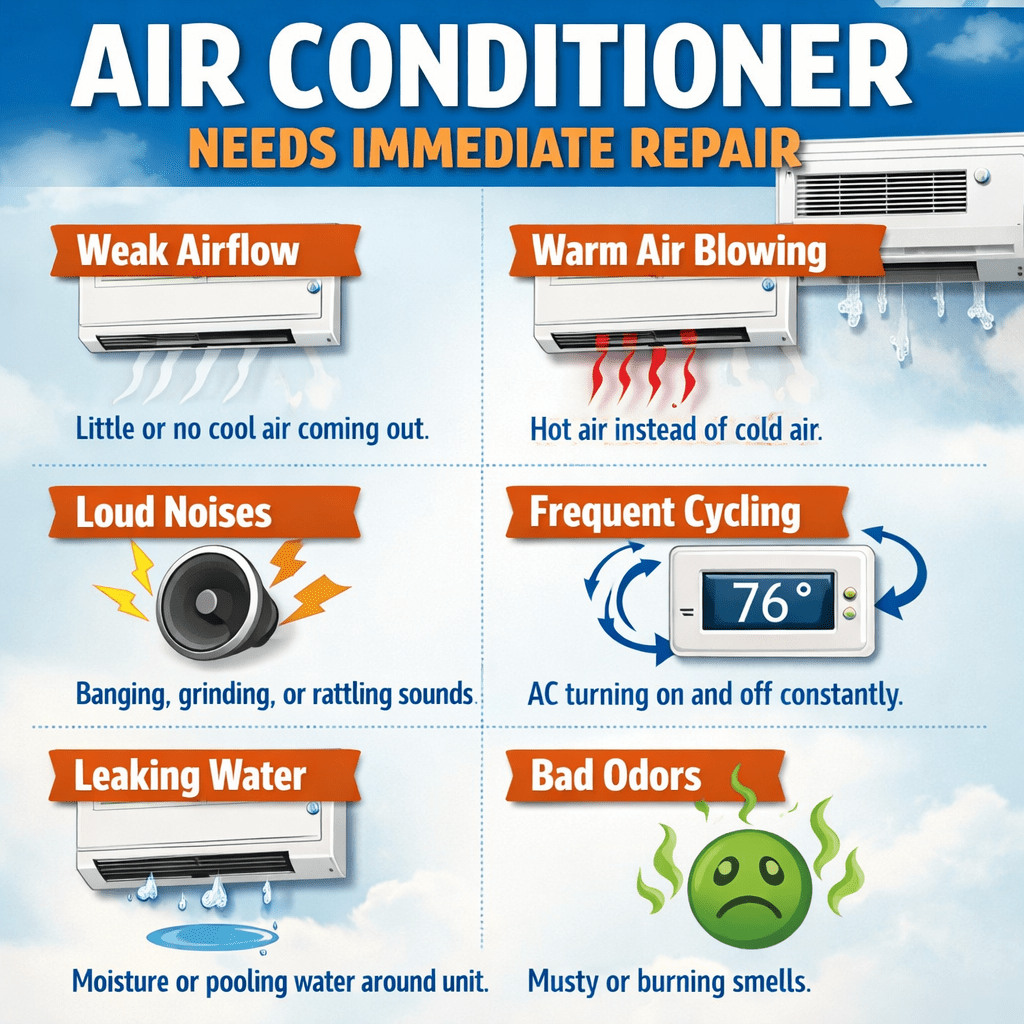
Signs Your Air Conditioner Needs Immediate Repair Air conditioners are designed to run quietly and efficiently. However, when something goes wrong, the system often shows warning signs before a complete breakdown occurs. Recognizing these early signs can help you avoid expensive repairs and keep your home comfortable. Weak Airflow One of the most common signs of a problem is weak airflow from the vents. If the air coming from your air conditioner feels weak or inconsistent, there may be a blockage or an issue with the fan or compressor. Poor airflow reduces cooling performance and may indicate that the system needs professional attention. Warm Air Instead of Cool Air If your air conditioner is blowing warm air instead of cool air, it could indicate a refrigerant problem or a malfunctioning compressor. This issue should be addressed quickly because it can significantly reduce the efficiency of your system. Unusual Noises Air conditioners normally operate quietly. If you start hearing unusual sounds such as grinding, banging, or rattling, it may indicate loose or damaged components. Ignoring these noises can lead to more serious mechanical damage over time. Bad Odours Unpleasant smells coming from your air conditioner can be a sign of mold, bacteria, or burned electrical components. Musty smells may indicate mold growth inside the system, while burning smells could signal electrical problems that require immediate attention. Higher Electricity Bills If you notice a sudden increase in your electricity bill without any change in usage, your air conditioner may be working harder than it should. This often happens when components become dirty or worn out, causing the system to lose efficiency. Water Leaks Around the Unit Air conditioners produce condensation, but water should never pool around the unit. If you see water leaks, the drainage system may be blocked or damaged. Ignoring water leaks can cause damage to your home and the air conditioning system. Conclusion Understanding the warning signs of air conditioner problems can help you take action before the system fails completely. If you notice weak airflow, unusual noises, or rising electricity bills, it may be time to schedule a professional repair service. Prompt repairs ensure your air conditioner continues to operate efficiently and keeps your home comfortable.
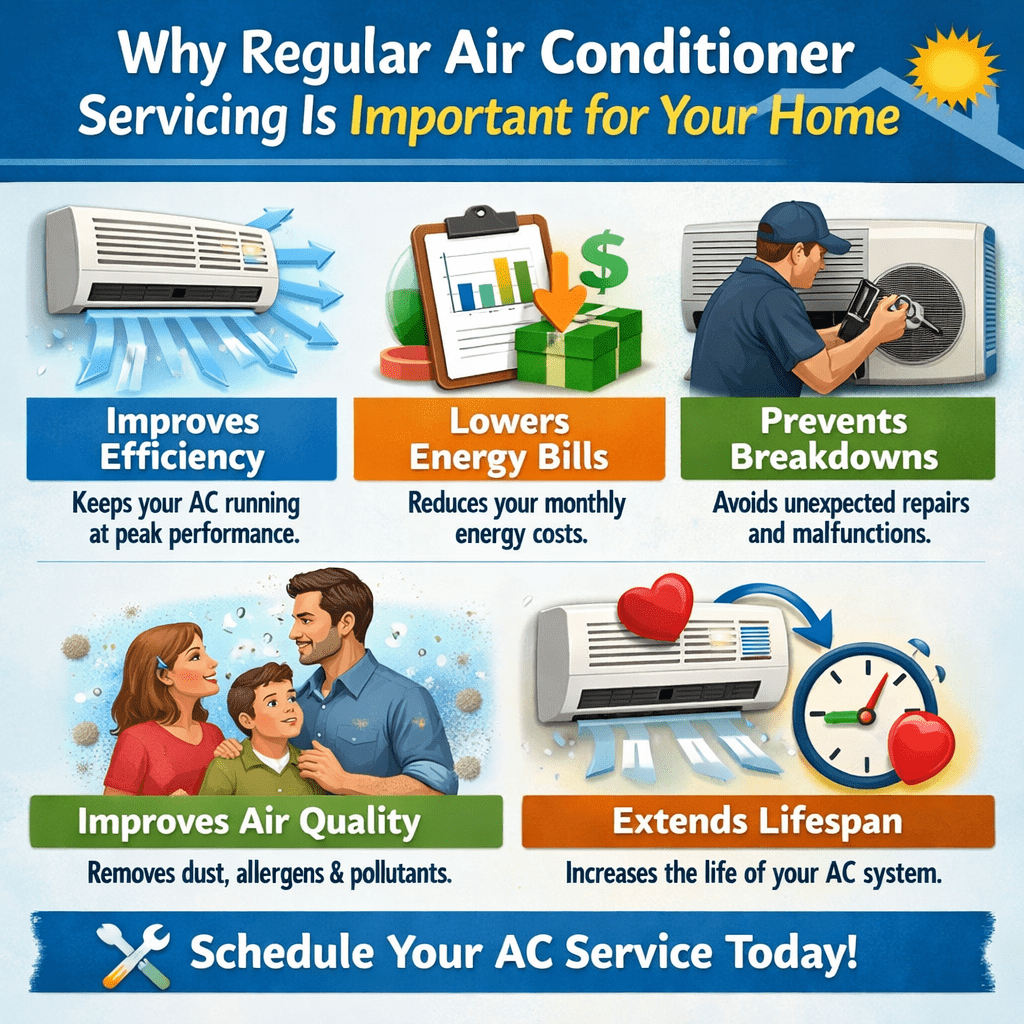
Why Regular Air Conditioner Servicing Is Important for Your Home Air conditioners play a major role in keeping homes and offices comfortable, especially during hot summers. However, many people forget that air conditioners need regular servicing to continue working properly. Without proper maintenance, your aircon can lose efficiency, consume more electricity, and eventually break down. Regular air conditioner servicing ensures that your system runs smoothly, keeps your indoor air clean, and extends the life of the unit. Improves Energy Efficiency One of the biggest benefits of regular aircon servicing is improved energy efficiency. Over time, dust and dirt accumulate in the filters, coils, and other components. This buildup forces the system to work harder to cool the room. When your air conditioner works harder than necessary, it consumes more electricity. Regular servicing removes dirt and blockages, allowing the system to operate efficiently and reduce energy costs. Prevents Costly Repairs Small problems in an air conditioner can quickly turn into expensive repairs if they are not addressed early. During a professional service, technicians inspect the system and identify potential issues before they become major failures. Regular servicing can detect problems such as refrigerant leaks, worn-out parts, electrical issues, and blocked drainage systems. Fixing these problems early can save homeowners a lot of money. Improves Indoor Air Quality Air conditioners do more than just cool the air. They also help filter dust, pollen, and other particles from the air. When filters become dirty, they can no longer effectively remove these pollutants. This can lead to poor indoor air quality, which may cause allergies, breathing problems, and discomfort. Servicing your air conditioner ensures that filters and components remain clean, allowing your system to deliver fresh and healthy air. Extends the Lifespan of the Unit Air conditioners are a significant investment, and replacing them can be expensive. Regular servicing helps protect that investment by extending the lifespan of the unit. A well-maintained air conditioner can last many years longer than one that receives little or no maintenance. Routine servicing keeps components in good condition and prevents unnecessary wear and tear. Maintains Consistent Cooling If your air conditioner is not serviced regularly, you may notice uneven cooling in your home. Some rooms may feel warmer than others, and the system may take longer to cool the space. Servicing ensures that all parts of the system are functioning properly, allowing the air conditioner to maintain consistent temperatures throughout the home. Conclusion Regular air conditioner servicing is essential for maintaining comfort, efficiency, and reliability. It helps reduce energy costs, prevents breakdowns, improves air quality, and extends the lifespan of the system. Scheduling routine maintenance ensures that your air conditioner continues to perform at its best, keeping your home cool and comfortable all year round.
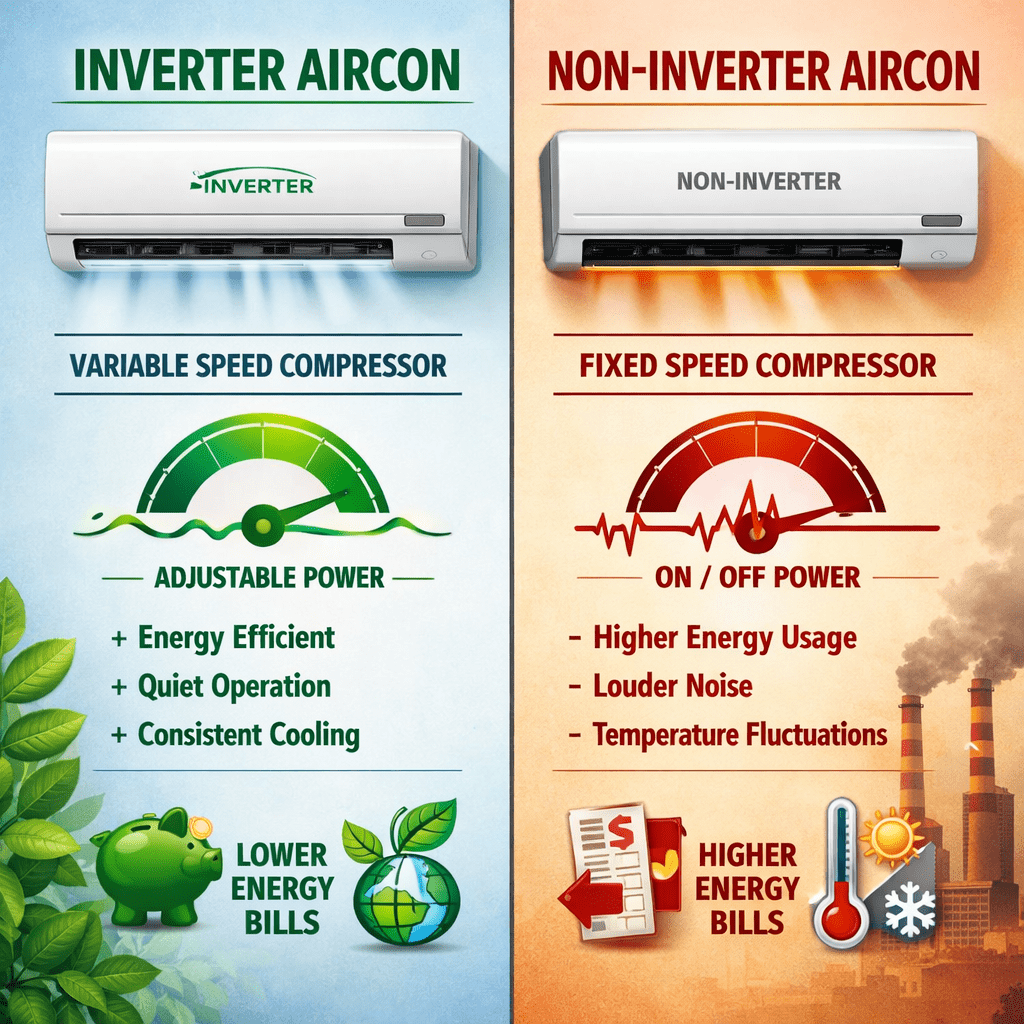
Inverter vs. Non-Inverter Air Conditioners: Making the Right Choice for Your Home Are you considering upgrading your air conditioning system but feeling overwhelmed by various options available on the market? One of the most significant decisions you’ll face is choosing between inverter and non-inverter air conditioners. In this comprehensive guide, we’ll break down everything you need to know about these two types of systems to help you make an informed decision. What are Inverter Air Conditioners? Let’s start by discussing inverter air conditioners. Unlike traditional non-inverter models, which operate at a fixed speed, inverter air conditioners use innovative technology to adjust the compressor speed according to the cooling or heating requirements of the space. This results in precise temperature control, faster cooling/heating, and significantly lower energy consumption. In simpler terms, inverter air conditioners work smarter, not harder, to keep you comfortable. One of the primary benefits of inverter technology is its energy efficiency. By continuously adjusting the compressor speed to match the desired temperature, inverter air conditioners consume only the necessary amount of electricity, leading to a huge cost savings over time. Additionally, inverter models tend to operate more quietly and produce fewer temperature fluctuations, providing a consistently comfortable indoor environment. What are Non-Inverter Air Conditioners? Now, let’s turn our attention to non-inverter air conditioners. These are the traditional models that operate at a fixed speed, cycling on and off to maintain the desired temperature. While non-inverter air conditioners are generally more affordable upfront, they tend to be less energy-efficient than their inverter counterparts. Because they cannot adjust their compressor speed, non-inverter models consume more electricity and may lead to higher energy bills in the long run. Despite their lower initial cost, non-inverter air conditioners come with some drawbacks. They are often louder during operation, as the compressor switches on and off frequently. Additionally, non-inverter models may struggle to maintain a consistent indoor temperature, leading to potential discomfort for occupants. However, for those on a tight budget or with limited cooling/heating needs, non-inverter air conditioners may still be a viable option Energy Efficiency and Cost Savings One of the most significant advantages of inverter air conditioners is their superior energy efficiency, which translates to substantial cost savings for homeowners. Unlike non-inverter models, which operate at full capacity until the desired temperature is reached and then shut off, inverter air conditioners adjust their compressor speed to maintain a consistent temperature, consuming only the energy required to meet the cooling or heating demands of the space.This results in lower electricity bills and reduced environmental impact over time. To put it into perspective, let’s consider a hypothetical scenario: two identical homes, one equipped with an inverter air conditioner and the other with a non-inverter model. Over the course of a year, the homeowner with the inverter air conditioner could see significant savings on their energy bills compared to their counterpart with the non-inverter system. Additionally, inverter air conditioners typically have a longer lifespan and require less frequent maintenance, further contributing to cost savings over time. Performance and Comfort When it comes to performance and comfort, inverter air conditioners have a clear advantage over non-inverter models. Thanks to their ability to adjust compressor speed and maintain a consistent indoor temperature, inverter air conditioners provide superior cooling/heating performance and a more comfortable living environment. Previous Next Whether it’s a scorching summer day or a chilly winter night, you can rely on an inverter air conditioner to keep you comfortable year-round. In contrast, non-inverter air conditioners may struggle to maintain a consistent temperature, leading to potential discomfort for occupants. Additionally, non-inverter models tend to produce more noise during operation, as the compressor switches on and off frequently. This can be particularly disruptive during the night or in quiet environments, such as bedrooms or home offices Noise Levels and Durability Another factor to consider when comparing inverter and non-inverter air conditioners is noise levels and durability. Inverter air conditioners are known for their quieter operation, as the compressor adjusts its speed smoothly and continuously to meet the cooling or heating demands of the space. This results in a more peaceful indoor environment, free from the constant hum of a traditional non-inverter model. Additionally, inverter air conditioners are often more durable and require less frequent maintenance than non-inverter models. Because they operate more efficiently and experience fewer temperature fluctuations, inverter air conditioners experience less wear and tear on their components, leading to a longer lifespan and fewer repair costs over time. Environmental Impact In today’s environmentally conscious world, reducing carbon emissions and minimizing energy consumption are top priorities for many homeowners. In this regard, inverter air conditioners have a clear advantage over non-inverter models. By consuming only the necessary amount of energy to meet the cooling or heating demands of the space, inverter air conditioners help reduce carbon emissions and conserve energy resources, making them a more eco-friendly choice for environmentally conscious consumers Additionally, inverter air conditioners often use more environmentally friendly refrigerants, further reducing their environmental impact. By choosing an inverter air conditioner, you can reduce your carbon footprint and contribute to a more sustainable future for generations to come. Factors to Consider When Choosing Between inverter and non-inverter aircons Now that we’ve explored the differences between inverter and non-inverter air conditioners, let’s discuss some factors to consider when making your decision. Budget: While inverter air conditioners tend to be more expensive upfront, they offer greater long-term energy savings and lower operating costs. You can also grab our at one of our stores. Cooling/Heating Requirements: Consider the size of the space you need to cool or heat and choose an air conditioner with the appropriate capacity to meet your needs. Energy Efficiency Ratings: Look for energy-efficient models with high SEER (Seasonal Energy Efficiency Ratio) ratings to maximize energy savings and minimize environmental impact. Noise Levels: If noise is a concern, opt for an inverter air conditioner with a reputation for quiet operation. Installation and Maintenance: Consider the installation and maintenance requirements of

Staying Cool in South africa: a beginner’s guide to hVAC systems In the heart of South Africa, where the sun reigns supreme and heatwaves dance across the landscape, staying cool isn’t just a luxury—it’s a survival strategy. Imagine this: what’s now a discomfort could become a deadly threat for nearly half to three-quarters of the population by the century’s end. It’s a warning bell ringing loud and clear—a call to action we can’t afford to ignore. One thing is certain: it’s time to take control of our indoor climate. But fear not, for we’re about to embark on a journey through the realm of HVAC systems—a journey that promises cool relief and comfort. Are you ready to beat the heat? Let’s get started! How Do HVAC Systems Work? HVAC stands for Heating, Ventilation, and Air Conditioning—a collection of technologies working in harmony to regulate indoor temperature, humidity, and air quality. Each component plays a crucial role in maintaining a comfortable and healthy indoor environment, regardless of external weather conditions. At its core, HVAC systems operate on the principle of thermal energy transfer. During cooling mode, heat energy is extracted from indoor air, cooling it down before being expelled outside. Conversely, during heating mode, heat energy is transferred from the heating source to the indoor air, raising its temperature. This thermal energy transfer is facilitated by refrigerants—chemical compounds with high heat absorption and release properties. As refrigerant flows through the system, it undergoes phase changes, alternately absorbing and releasing heat energy to achieve the desired indoor temperature. Top Air Conditioners to Consider: When it comes to investing in an air conditioning system for your home or office, choosing the right brand can make all the difference in terms of performance, durability, and energy efficiency. Among the plethora of options available in the market, two brands stand out for their exceptional quality and reliability: Jet Air and Alaska. Samsung AR3000 Non-Inverter Samsung AR6500 Windfree Inverter Renowned for its cutting-edge technology and superior cooling performance, Samsung offers a range of both inverter and non-inverter air conditioners to suit different needs and preferences. Inverter models provide precise temperature control and energy savings by adjusting compressor speed, while non-inverter models offer reliable cooling performance at a more affordable price point. Alaska EV09 Eco Inverter Series Alaska Non Inverter Ax Series Alaska air conditioners are synonymous with durability and dependability, available in both inverter and non-inverter variants to cater to diverse requirements. Inverter models deliver energy-efficient cooling with variable compressor speed, ensuring optimal comfort while reducing electricity consumption. On the other hand, non-inverter models provide reliable cooling performance without the advanced features of their inverter counterparts, making them a cost-effective choice for budget-conscious consumers. Importance of Regular Maintenance Regular maintenance isn’t just about keeping your HVAC system in good shape; it’s about safeguarding your investment and ensuring optimal performance, especially in a climate as demanding as South Africa’s. Here’s why it matters: Enhanced Efficiency Over time, dust, debris, and wear and tear can take a toll on your HVAC system, causing it to work harder and consume more energy to maintain the desired temperature. Regular maintenance helps keep components clean, lubricated, and operating smoothly, resulting in improved efficiency and lower energy bills.Prevention of BreakdownsNothing disrupts comfort quite like an unexpected HVAC breakdown, especially during the sweltering heat of summer. By scheduling regular maintenance checks, potential issues can be identified and addressed before they escalate into major problems, reducing the risk of untimely breakdowns and costly repairs.Extended LifespanJust like regular oil changes prolong the life of a car engine, routine maintenance extends the lifespan of your HVAC system. By addressing minor issues early on and ensuring all components are functioning optimally, you can enjoy reliable performance for years to come, delaying the need for costly replacements. Previous Next Signs of HVAC Problems Your HVAC system plays a crucial role in maintaining comfort and indoor air quality, especially in the demanding climate of South Africa. However, like any mechanical system, it’s susceptible to wear and tear over time. Recognizing the signs of HVAC problems early on can help prevent minor issues from escalating into major malfunctions. Here are some common signs that indicate your HVAC system may be experiencing problems: 1. Strange Noises: Unusual sounds emanating from your HVAC system, such as banging, rattling, or grinding noises, may indicate mechanical issues or loose components. Ignoring these noises can lead to further damage and costly repairs down the line. 2. Uneven Cooling or Heating: If certain areas of your home consistently feel warmer or cooler than others, it could be a sign of airflow problems, duct leaks, or thermostat issues. Addressing these issues promptly can help restore comfort and prevent energy waste. 3. Increased Energy Bills: A sudden spike in your energy bills without a corresponding increase in usage could signal inefficiencies or malfunctions within your HVAC system. This may be due to dirty filters, refrigerant leaks, or aging equipment that requires servicing or replacement. 4. Frequent Cycling or Short Cycling: If your HVAC system frequently turns on and off, or cycles on and off rapidly, it may be experiencing issues with temperature regulation, thermostat calibration, or compressor malfunctions. This can lead to increased energy consumption and premature wear on components. 5. Poor Indoor Air Quality: Noticeable changes in indoor air quality, such as increased dust, allergens, or humidity levels, may indicate problems with your HVAC system, such as clogged filters, duct leaks, or malfunctioning ventilation components. Addressing these issues can improve comfort and respiratory health. 6. Water Leaks or Moisture Buildup: Water leaks or moisture buildup around your HVAC unit or indoor vents can indicate issues with condensate drainage, refrigerant leaks, or malfunctioning components. Ignoring these signs can lead to water damage and mold growth, compromising indoor air quality and safety. Benefits of Professional HVAC Services While DIY maintenance tasks can help homeowners keep their HVAC systems in good condition, there are certain benefits that only professional servicing can provide. At