
Common Air Conditioner Noises and What They Mean
Air conditioners are designed to operate quietly and efficiently while cooling your home or office. When everything is working properly, you should only hear a soft humming sound from the unit as it circulates cool air throughout the room. However, when unusual noises begin to appear, it is often a sign that something inside the system is not functioning correctly.
Many homeowners ignore strange sounds coming from their air conditioners, assuming the noise will eventually go away on its own. Unfortunately, this can lead to bigger problems over time. Small mechanical issues can quickly develop into major system failures if they are not addressed early.
Understanding the different types of air conditioner noises can help you identify potential problems before they become serious. Certain sounds may indicate minor issues that can be resolved through routine maintenance, while others may signal more serious mechanical or electrical faults that require professional repair.
In this guide, we will explore some of the most common air conditioner noises, what they mean, and when it is time to call a professional technician. By learning how to recognize these warning signs, you can protect your air conditioning system, avoid costly repairs, and ensure your home remains cool and comfortable.
Why Your Air Conditioner Might Make Strange Noises
Before looking at specific sounds, it is important to understand why air conditioners sometimes become noisy. An air conditioning system contains several moving components that work together to cool the air. These components include fans, compressors, motors, refrigerant lines, and electrical parts.
Over time, normal wear and tear can affect these components. Dirt buildup, loose parts, worn bearings, and electrical issues can all cause the system to produce unusual sounds. Environmental factors such as dust, debris, and extreme temperatures can also contribute to noise problems.
Regular servicing plays an important role in preventing many of these issues. During routine maintenance, technicians clean the system, inspect components, and tighten loose parts to ensure everything operates smoothly.
However, when maintenance is neglected or components begin to fail, the system may start producing unusual sounds that should not be ignored.
Banging Sounds
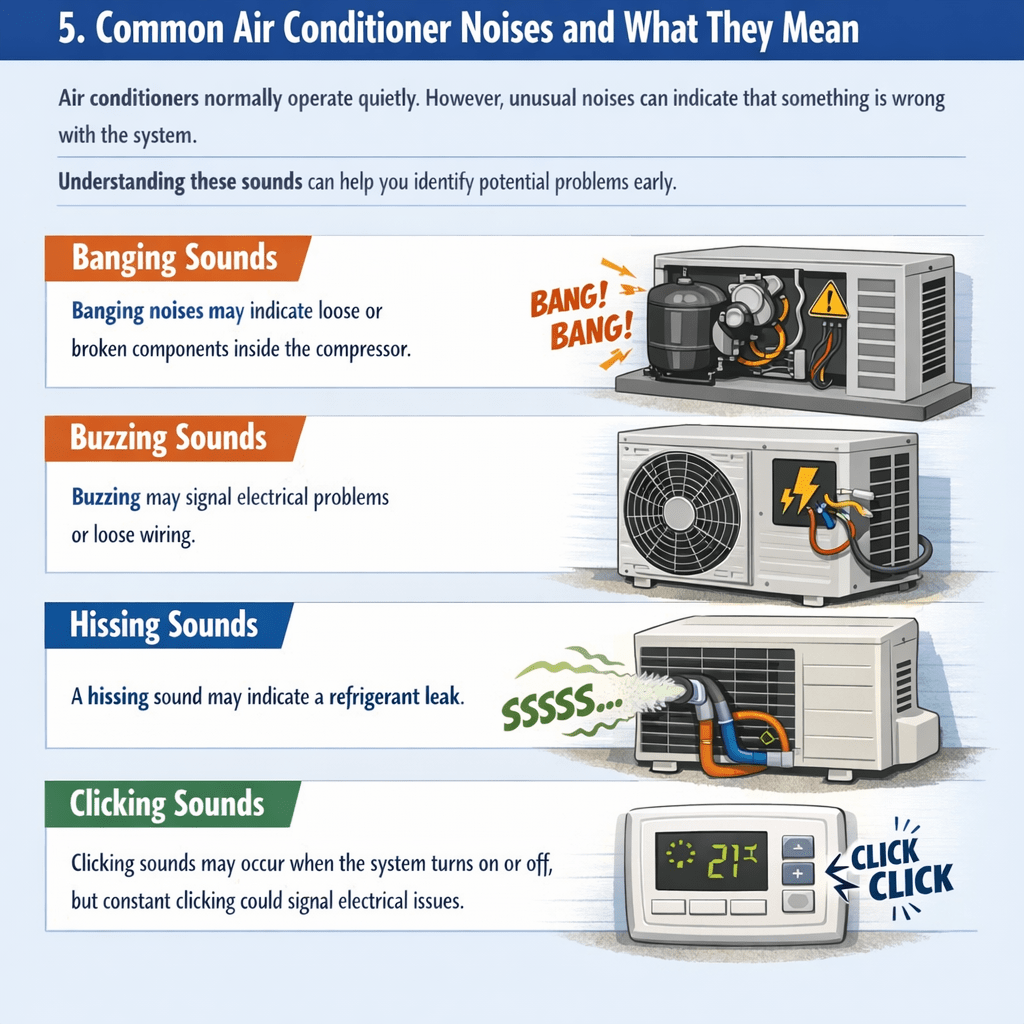
Banging is one of the most concerning noises that an air conditioner can make. If you hear a loud banging or clanking sound coming from your unit, it may indicate that a component inside the compressor has come loose or broken.
The compressor is one of the most important parts of an air conditioning system. It is responsible for circulating refrigerant through the system so that heat can be removed from the air. Because the compressor contains several internal components, any loose or damaged part can cause banging noises as it moves around inside the unit.
In some cases, banging sounds may also occur if the fan blades become loose or unbalanced. When the fan spins, loose blades may strike other components, producing loud knocking sounds.
Ignoring banging noises can be dangerous because the moving parts may cause further damage to other components. If you hear banging sounds coming from your air conditioner, it is best to turn off the system and contact a professional technician for inspection.
Buzzing Sounds
Buzzing noises are another common problem that homeowners experience with air conditioning systems. While some air conditioners produce a slight humming sound during normal operation, a loud buzzing noise usually indicates a problem that requires attention.
Several issues can cause buzzing sounds in an air conditioner. One of the most common causes is electrical problems. Loose wiring, damaged electrical connections, or failing capacitors can create buzzing noises as electricity flows through the system.
Buzzing may also occur if the outdoor unit becomes covered with dirt, leaves, or debris. When airflow is restricted, the system must work harder to operate, which can create unusual vibrations and buzzing sounds.
Another possible cause is a malfunctioning fan motor. If the fan motor begins to wear out, it may produce buzzing sounds while struggling to spin properly.
Although buzzing noises do not always indicate a serious failure, they should still be investigated by a professional technician. Electrical issues in particular should never be ignored because they may pose safety risks.
Hissing Sounds
A hissing sound coming from your air conditioner may indicate a refrigerant leak. Refrigerant is the substance responsible for absorbing heat from indoor air and releasing it outside. Without the correct amount of refrigerant, your air conditioner will struggle to cool your home effectively.
When a refrigerant line develops a small crack or hole, pressurized refrigerant can escape, producing a hissing noise. This sound may be similar to air escaping from a tire or a small gas leak.
Refrigerant leaks are a serious problem that should be repaired immediately. Low refrigerant levels can cause the system to lose cooling capacity and may even damage the compressor if left untreated.
Additionally, refrigerant should only be handled by certified technicians because it requires specialized equipment and proper safety procedures.
If you hear a persistent hissing sound near your air conditioning unit, it is important to schedule a professional inspection as soon as possible.
Clicking Sounds
Clicking sounds are not always a cause for concern. In many cases, air conditioners produce a clicking sound when they turn on or off. This is usually caused by electrical components such as relays or thermostats activating the system.
However, constant or repeated clicking noises may indicate an electrical issue. Faulty relays, failing thermostats, or damaged control boards can cause the system to repeatedly attempt to start without successfully running.
When this happens, the air conditioner may switch on and off frequently, a problem known as short cycling. Short cycling not only produces clicking sounds but can also reduce the efficiency of the system and increase energy consumption.
If clicking sounds continue for extended periods or occur repeatedly, it is advisable to have the system inspected by a qualified technician.
Rattling Sounds
Rattling sounds often occur when loose parts are vibrating inside the air conditioning unit. Screws, panels, or internal components may become loose over time due to normal wear and tear.
Debris such as small stones, sticks, or leaves can also enter the outdoor unit and create rattling noises when the fan spins.
Although rattling noises may not always indicate a serious problem, they should still be checked. Loose components can cause additional damage if they continue vibrating while the system operates.
Regular servicing helps prevent rattling by ensuring that all components are properly secured.
Screeching or Squealing Sounds
High pitched screeching or squealing sounds often indicate problems with the fan motor or belt inside the air conditioning system. These sounds usually occur when parts begin to wear out or lose lubrication.
For example, worn motor bearings may produce a screeching sound as the fan rotates. In older systems that use belts, the belt may become loose or worn, causing a squealing noise during operation.
These issues typically require professional repair or replacement of the affected components.
Why You Should Never Ignore Air Conditioner Noises
Strange sounds from your air conditioner should never be ignored. Even if the system continues to operate, unusual noises often indicate underlying problems that can worsen over time.
Ignoring these warning signs may lead to:
Reduced cooling performance
Higher electricity bills
Frequent system breakdowns
Shortened lifespan of the unit
Costly repairs or replacements
Addressing issues early can save money and prevent major damage to the system.
How Regular Maintenance Prevents Noise Problems
One of the best ways to prevent unusual air conditioner noises is through regular maintenance. Professional aircon servicing helps keep the system clean, properly lubricated, and operating efficiently.
During routine maintenance, technicians typically perform the following tasks:
Cleaning air filters and coils
Inspecting refrigerant levels
Checking electrical connections
Tightening loose components
Lubricating moving parts
Inspecting the fan and motor
These steps help ensure that the system continues running smoothly and quietly.
When to Call a Professional Technician
While some minor issues can be resolved through basic maintenance, many air conditioner problems require professional expertise. You should contact a technician if you notice:
Loud banging or grinding noises
Persistent buzzing sounds
Hissing from refrigerant lines
Constant clicking during operation
Unusual vibrations or rattling
A professional technician can diagnose the problem accurately and recommend the appropriate repair.
Conclusion
Air conditioners are designed to operate quietly, so unusual noises should always be taken seriously. Sounds such as banging, buzzing, hissing, clicking, or rattling can indicate a variety of mechanical or electrical problems within the system.
Understanding these noises can help homeowners identify potential issues early and prevent more serious damage. While some minor problems may be resolved through maintenance, many situations require professional inspection and repair.
If your air conditioner begins making unusual sounds, it is best to have the system checked by a qualified technician. Prompt servicing not only protects your air conditioning unit but also ensures that your home remains comfortable and energy efficient throughout the year.